News
Which factors are more important in polyester bonded thread products
Release time:
2021-09-15
Category:
Industry News
Polyester bonded thread products, also known as double-twisted yarns, are processes in which monofilaments or strands are twisted to obtain a certain twist direction and number of twists. In short, the filaments are twisted. Twisting is necessary to make the sliver into a yarn. Before twisting, the loose fibers generally need to be condensed into fiber strips. After twisting, the outer fibers of the fiber strips can be squeezed to the inner layer to generate centripetal pressure, so that the whiskers can obtain friction along the length of the fibers.
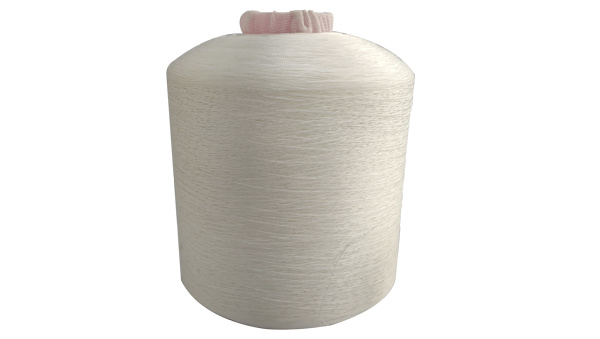
By twisting, fiber strips or filament bundles can be twisted into single yarns or twisted yarns; two or more single yarns or twisted yarns can be twisted into strands; filaments or short fibers can be bundled On the main fiber or with a binder twisted into a special style of yarn and so on. The main purpose of twisted yarn is to increase its strength and elasticity with its filaments and twist.
Polyester bonded thread products increase the strength and friction resistance of the thread to reduce fuzz and breakage and improve the fastness of the silk fabric.
Make the silk thread have a certain shape and color, and give the appearance of the fabric with the effects of refraction, crepe, loops, knots, etc.
Increase the elasticity of the silk thread, improve the wrinkle resistance of the fabric (imitation memory non-iron fabric) and breathability (strong twist fabric), making the fabric cool and comfortable to wear.
Which factors are important in twisting polyester bonded thread products?
There are two types of twisting methods for polyester bonded thread products: dry twisting and wet twisting. Conventional twisting adopts dry twisting, but for some multi-strand mulberry silk, wet twisting method must be used to meet the technological requirements.
The dry twisting process adopts the ordinary twisting machine and the double twisting machine, while the wet twisting process adopts the wet twisting machine.
To make the yarn surface have fancy effects such as hairiness and knots, a fancy twisting machine must be used.
When the yarn is twisted again, the twist direction used is generally opposite to the twist direction of the initial twist.
Whether the warp and weft raw materials need to be twisted, why they are twisted, what twist direction to add, and how much twist to add should be set according to the requirements of fabric varieties and specifications.
Keywords: Polyester,bonded,thread,products
-
Nantong Riko Ind. Thread Co., Ltd.
Address: Group 14, Zhongtian Village, Hekou Town, Rudong County, Nantong City, Jiangsu Province, China
Tel: 86-513-8488-1758 Fax: 86-513-8488-1758
E-mail: riko@rikoindus.com